









Autumn Black Cat
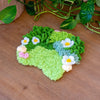
Welcome to the guide for your AUTUMN BLACK CAT Moss Coaster Kit!
Inside you’ll find everything you need to craft a cosy autumn scene - complete with a mischievous black cat, glowing pumpkins, and crisp fall leaves. The perfect little Halloween landscape to display on your desk or coffee table 🎃🐾✨
Inside Your Kit
You'll find everything you need to craft your own adorable bunny oasis!
Yarn & Base Materials
⭐ Bobble Yarn in Green
⭐ Feather Yarn in Grass Green, Light Green and Light Blue
⭐ Milk Yarn in White, Butter Yellow and Light Orange
⭐ Pipe Cleaners in Cream, Brown, Pink, Green and Orange
⭐ Pressed Felt in white
⭐ Latch-Hooking Canvas Base
Crafty Tools
⭐ Plastic Latch Hook
⭐ Glue Stick for Hot Glue Gun
⭐ Needle & Needle Threader
⭐ Cotton Thread
⭐ Plastic Weaving Needle
⭐ Plastic Eyes for bunnies
What You'll Need
✂️ Craft Scissors - Any size will work, but we recommend our ergonomic moss scissors.
⭐ Hot Glue Gun - Available at many DIY retailers, you don't need a fancy glue gun to have a big impact on your craft. Any heat setting will work.

Inside Your Kit
The Moss Box - Black Autumn Cat Guide
Step-By-Step Guides
Below you'll find each of the steps to making your coaster, with recommendations on the order to stitch each element. If you're a newbie to crafting it will be worth following this step-by-step, so that you can get comfortable with the techniques and tools used in this kit.
If you want to create your own variations, you can stitch each section in whichever order you want. So don't feel constrained by our guidelines.

Step 1: Bobbles (using veriegated orange bobble yarn)
Step 2: More Bobbles (using veriegated brown bobble yarn)
Step 3: Feather Yarn Grass (using mustard yellow feather yarn)
Step 4: Embroidered Flower Details (using brown feather yarn)
Step 5: Adding Pom Poms (using straw green milk yarn)
Moving onto your decorative elements ...
Step 6: Adding Pumpkin Pom Poms (using straw green and deep orange milk yarn)
Step 7: Pipe Cleaner Cat & Witches Hat (using range of pipe cleaners)
You can also use the image below to see the details of each element on your coaster.


Black Cat Walkthrough
Below is a video that will walkthrough the creation of your moss coaster. This video will show you the process, but it won't include detailed tutorials. So if you're new to making moss coasters - make sure you keep on scrolling! You'll fine in-depth tutorials for each technique below.
First Things First - Transferring your Stencil
Your first step in creating your moss coaster is to transfer your coaster design from the stencil onto your latch-hooking canvas. To do this you'll need your canvas and a marker of some kind. We recommend using a sharpie or similar permanent marker, but a regular pen or drawing marker will work just fine.
Simply lay the canvas on top of your stencil and use the marker to trace the design behind it. The stencil matches our design with the smaller shapes roughly indicating where we will stitch each type of 'moss' in the following steps.
Feel free to get creative with the shape of your design, as your coaster doesn't have to be exactly like the stencil. You could make it a little larger or smaller depending on how you'd like to use it. Just remember to leave a 1/2 inch space between your coaster shape and the edge of the canvas.
TIP: Why not move the smaller shapes around within your coaster? You can get creative with the layout.
Step-By-Step Instructions
This guide will walk you through each step of your moss coaster, and include video tutorials for each technique you will need to learn. If you're already familiar with the techniques used for moss kits, you may just want to watch our walkthrough video (shown above) without needing to dive deeply into each step.
1. Weaving Bobbles
To start your coaster, you'll be stitching the textured Bobbles at the top right of your coaster using your orange bobble yarn and your latch-hook tool. Follow the video tutorial below to learn the technique.
2. More Bobbles
Next you'll repeat the same technique as above, to fill in the shape on the top left of your coaster with Bobbles. This time you'll be using your brown bobble yarn instead.
Use the video tutorial in step 1. if you need a refresh on the technique.
3. Weaving your Feather Yarn Grass
Now it's time to weave in the 'grass' on your mossy coaster. You'll be stitching across the remaining visible space on your coaster, using one large layer of your mustard yellow feather yarn.
Follow the below video tutorial to learn how to weave your grass section. Its a very simple technique, using your weaving needle you'll be stitching back and forth to cover the canvas section.
4. Embroidered Flower Details
Now that your coaster is completely covered, its time to add a few details! This is where things can get crafty and creative.
The first decorative element you will be adding is your Embroidered Details using feather yarn, which will blend in your soft flower shapes in to the yellow base. You'll be using your brown feather yarn for this section.
You'll be stitching 3x soft brown flowers into your base using the technique shown in the tutorial below.
OPTIONAL: You can also add embroidery details using milk yarn! Your straw green or orange yarn will also work if you'd like to add flowers or fallen-leaf details onto your piece. You can check out the below tutorial to add some unique charm to your moss coaster.
5. Pom Poms
The second detail you'll be adding onto your coaster is some fluffy green Pom Poms that will blend into your brown bobble yarn. For these you will be using your straw green milk yarn.
Use the following tutorial to learn to make pom poms. In this coaster, we've made 3x small sized pom poms, each using around 20x loops around. These pom poms are then trimmed and fluffed up.
We've placed all three pom poms amongst the brown bobble yarn that you added in step 2, but you can place these wherever you like on your piece.
For your pom poms, why not experiment with multiple colours of your milk yarn? Or mix it up by adding a looped pom pom? There really is so much that you can create with pom poms - allowing yourself to give your coaster its own unique personality.

6. Pumpkin Pom Poms
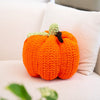
Now that your coaster is complete, we're going to be getting playful with some new crafting techniques. We'll be making two Pumpkin Pom Poms that are uniquely shaped to look like bright orange pumpkins on your coaster.
We've designed these to sit on top of your coaster, so that they can be moved around in case you need extra space for your mug. But you can use the extra orange threads from the bottom of your pumpkin to secure them to the canvas.
Follow the tutorial below to bring your Pumpkin Pom Poms to life!
7. Pipe Cleaner Black Cat
Onto the final step of your mossy creation - you're going to be crafting your own spooky and sweet friend out of pipe cleaners.
Your cat will use 3x dark grey pipe cleaners for the body, 1x yellow and 1x magenta pipe cleaner for the tiny hat. You will also need your black eyes included in the kit, a hot glue gun or tacky glue, and your needle and thread (optional) if you would like to add whiskers. Finally, scissors will come in handy for cleaning up the glue on your cat's eyes.
We've included extra pipe cleaners and eyes, just in case you need spares!
Use the video below to craft your pipe cleaner decorative elements.
Watch below on how to add eyes to your pipecleaner cat:
Backing your Coaster
Congratulations on finishing the main part of your coaster! Now you're onto the home stretch, its time to work on the back of your coaster.
There are 2x steps to finishing your coaster, which we show in the below tutorial. First you'll need to roughly trim the canvas edging and sew it down to the back of your piece.
Then it's time to back your coaster with your felt either with glue or by sewing it. If you're using it as a decor piece or to hang on the wall, it may be better for you to leave it at it's current stage. It will be easier to hang on a wall hook if the back is free from felt.
Sewing your Backing
Our kit includes all of the supplies you need to sew the backing of your coaster.
To sew your fabric you'll want to trace the shape of your coaster so that you can cut out the felt fabric to match the shape. You can do this with a pencil or pen.
You will then need to pin your felt backing to your coaster so you can begin sewing the edges. You can do this by using sewing pins, bulldog clips or even tacking the back with a hot-glue gun. I find bulldog clips the easiest method of holding my coaster to the felt.
Using 3-strands of your cotton thread, begin stitching your canvas to your mossy coaster using a whip stitch. This just means that you will whip your thread around and around the edge of your coaster as you go around. Don't worry if your stitches don't look perfectly neat, they'll blend into the grass on your coaster and won't be visible when you're finished.
Gluing your Backing
If you have any fabric glue handy or a hot glue gun then you can also glue the backing of your coaster. We've included a glue stick for a standard craft hot glue gun, as well as a glue paddle if you have fabric glue.
To glue your fabric you'll simply place fabric glue across the middle of your felt square and place your coaster on top. Allow it to dry so that the coaster is secure - you may want to put a heavy book on top of your coaster to add pressure. Once it's dry you can take a sharp pair of scissors to cut around the coaster.
You can then top up the glue on the edges, if any sections are lifting up.
Join The Club!
Be the first to know about new products, special releases, and much more!
